
Massac Projected Versus Actual Release
A projected date is an estimate built from the sentence, custody credit, governing credit rules, and later adjustments. IDOC’s public profile generally calls one field the Projected Parole Date. Its internal docket card uses “Projected minimum/release date” and “Projected maximum/mandatory outdate.” Those labels must not be turned into a guaranteed exit date.
An actual release date records an event that occurred. Even then, destination matters. A departure to another jail, ICE, or federal custody is a transfer, not community release. Parole or MSR means the person left prison but remains under state supervision.
Find Massac Projected Release Dates
Start with the sentence source. IDOC does not calculate dates for a person who never entered state custody. Likewise, the sheriff app’s current-inmate information is not a sentence calculator or release archive.
- Check the Massac court order and mittimus, the written commitment directing custody.
- Determine whether the sentence is served in Massac County Jail or IDOC.
- For IDOC, search by last name, birthdate, or IDOC number and open the profile.
- Read admission, projected parole, last parole, projected discharge, offense, sentence, and discharge fields together.
- For a county sentence, ask the Sheriff for the computation and release record tied to the court order.
The Massac County release search provides the broader court and records-request route when the public profile is not enough.
Illinois Massac Sentence Credit
The calculation begins with the offense statute and date, sentence length, concurrent or consecutive terms, and credit for time already spent in custody. Then the applicable version of 730 ILCS 5/3-6-3 controls sentence credit. Certain listed crimes require full service. Specified violent offenses commonly have an 85 percent minimum, some categories receive 75 percent treatment, and other eligible sentences may receive day-for-day or authorized earned credit.
The “85 percent rule” is not universal. Offense dates, exceptions, caps, exclusions, and statutory floors matter. Presentence credit and sentence structure also affect the calendar. IDOC performs the official state calculation. A court record or IDOC record should resolve an individual dispute.
The IDOC FAQ states that Earned Sentence Credit can revise a projected parole date and that the revised date appears online after the person is notified.
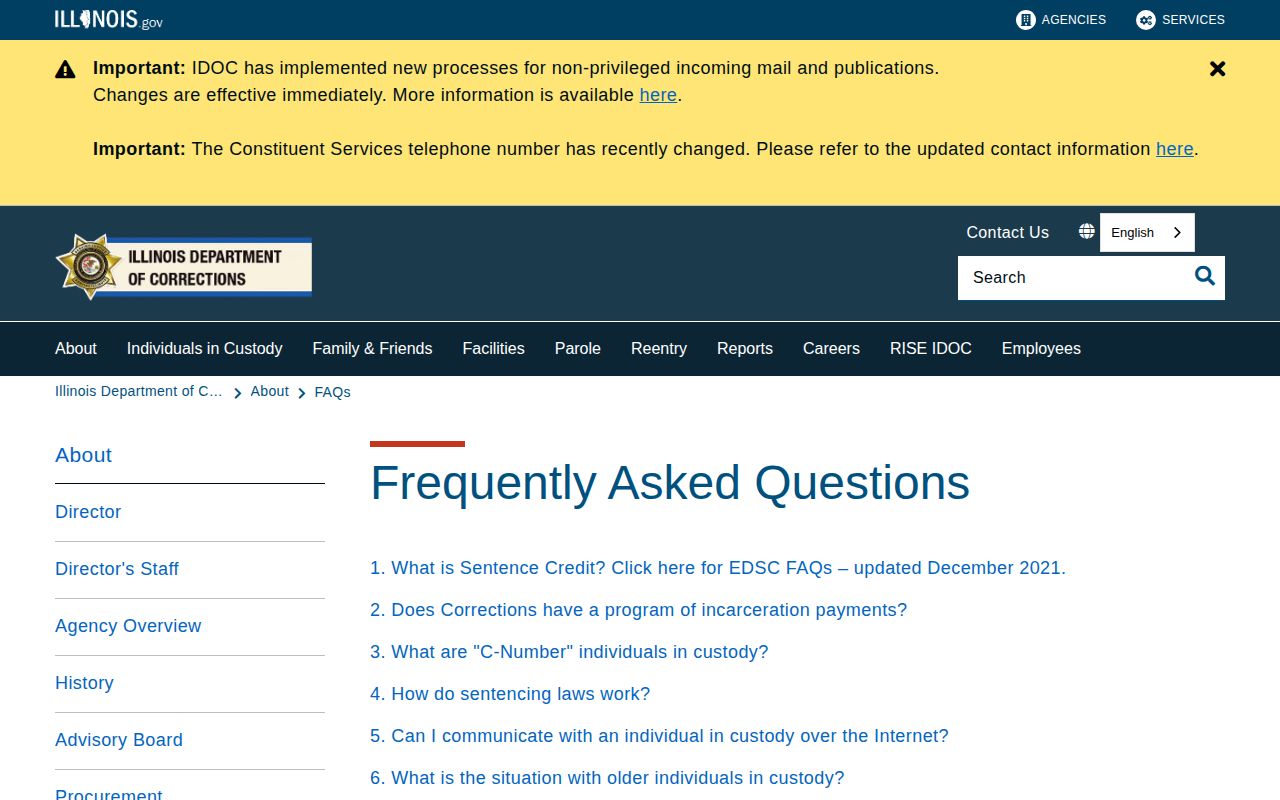
The captured FAQ source supports checking the current public profile again after IDOC applies an authorized credit revision.
Why Massac Release Dates Change
A projected date changes when a fact used in the official computation changes. A shift does not by itself show an error. Compare the current profile with the sentencing order and prior record before asking the responsible agency to explain its existing calculation.
| Factor | Possible effect |
|---|---|
| Earned sentence credit | May move the projected parole date earlier within legal limits. |
| Discipline | Credit may be withheld, revoked, or later restored. |
| Corrected mittimus or appeal | Changes a sentence input used by IDOC. |
| New consecutive term | Can extend the controlling custody period. |
| Detainer or hold | May change the destination even if one custody term ends. |
| Release-plan review | Can affect placement or timing under the governing process. |
Confirm Massac Actual Release
When the projected day arrives, stop treating the estimate as proof. For a county inmate, ask the Massac Sheriff for the release or transfer entry and destination. For a state prisoner, read the IDOC status and actual parole or release history, then seek IDOC records if the public profile is unclear.
A person registered before the event can use the Massac VINE inmate check for a release or transfer alert. Preserve the alert time and verify with the agency. VINE can lag and cannot establish final discharge from supervision.
Massac County Sentence Calculations
County calculations differ from IDOC calculations. The Sheriff implements the court order and applicable Illinois credit law for a county sentence. No Massac-specific published good-time formula or weekend-release rule was found. Do not import a rule from another county or promise release on the prior business day.
Ask for the sentencing order, sheriff computation, and discharge record. Illinois FOIA can obtain existing nonexempt records, but it does not require the Sheriff to give legal advice or create a new calculation. A focused request names the person, date range, booking number if known, and desired computation or release entry.
Note: A pretrial detainee has no sentence-based projected date; the Massac court order controls the next custody event.
Massac IDOC Date Fields
An IDOC profile can include Admission Date, Projected Parole Date, Last Paroled or Parole Date, and Projected Discharge Date. It can also list mittimus and case information, offense, sentence, conviction county, and whether the sentence discharged. “PAROLE” and a parole district describe continuing supervision, not final discharge.
Once a sentence is complete, the public profile may disappear. IDOC directs researchers to its archived Record Search contact with full name, birthdate, year received, conviction county, facility, and known dates. That archive route is vital for an older Massac County commitment.
Massac Court Date Inputs
The sentencing order and mittimus supply the legal inputs for both county and state calculations. Check the offense statute and date, sentence length, presentence custody credit, and whether multiple terms run at the same time or one after another. A corrected mittimus or appellate order can change an input after the first projected date was calculated.
Judici’s Massac County court search can help locate charges, dispositions, sentence entries, hearing dates, and minutes in public cases. It does not establish the physical door-exit time. Sealed, juvenile, adoption, impounded, and other nonpublic matters are excluded. Obtain the signed order from the Circuit Clerk when the exact sentence language controls.
A pretrial release order is not a projected sentence-completion date. It may authorize release when conditions are met, yet another hold can still prevent community departure. The Sheriff’s custody record supplies the event and destination.
Massac Discharge After Release
Projected discharge and projected parole answer different questions. A projected parole date concerns leaving the prison institution under supervision. A projected discharge date estimates when the state sentence or supervision relationship ends. The actual parole date may arrive long before final discharge.
The Illinois Prisoner Review Board’s early and final discharge processes can create a stronger record that supervision ended. Public hearing calendars and results cover specialized cases, not every IDOC departure. For routine status, begin with IDOC and request the official discharge record when the public profile is incomplete.
If a person has already left custody, do not keep quoting the old projected date. Replace it with the actual release date, release type, destination, supervision status, and final discharge information supported by agency records.
Massac Release Plan Effects
A lawful sentence calculation does not always reveal where the person will go. IDOC release planning, a receiving parole district, community placement, or another authority’s detainer can affect the destination. The custody date and the community-arrival date can therefore answer separate questions.
IDOC notification directive 01.07.211 identifies record fields such as release date, community-status type, projected discharge date, agent or parole office, committing county, and parent institution. Those details help separate an IDOC parole release from a transfer. Request the notification or release record when the public profile shows too little context.